How do you actually get your game discovered in 2026, without killing creativity?
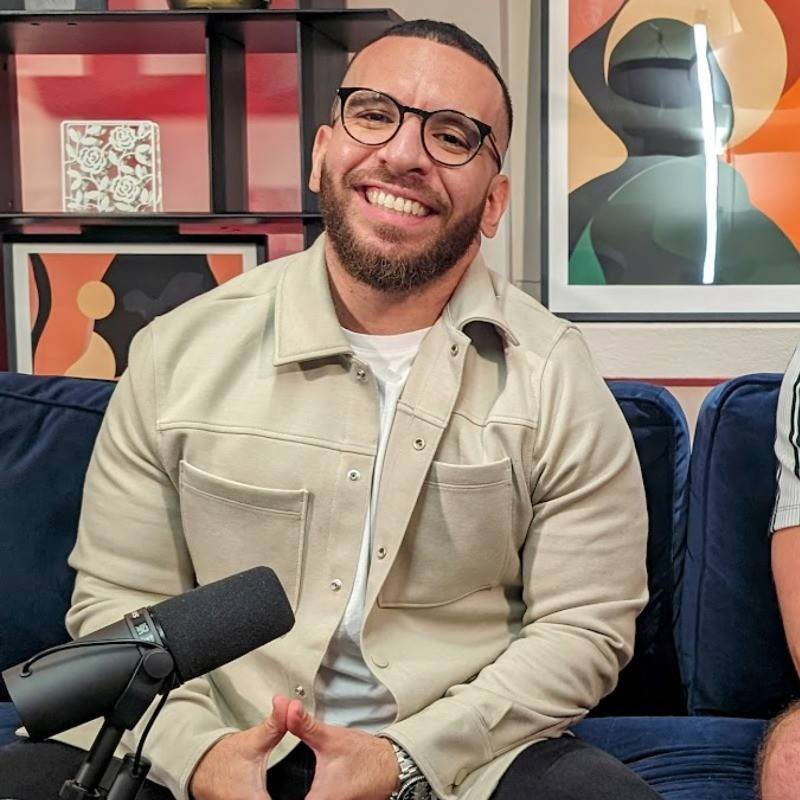
In this episode, I sit down with Frode Krisner, Founder and Co-CEO at Gameopedia, the hidden data layer powering discovery for YouTube, Google, Amazon, Samsung, and others, reaching over a billion gamers every year.
We explore how game discovery really works, why genre is breaking down, how emotional data beats tags, and how AI can amplify creativity instead of replacing it.
If you’re a game developer, founder, publisher, investor, or strategist, this episode will permanently change how you think about discovery, data, and creativity in games.
Hivemind: B2B Gaming Events
Curated roundtable mixers for founders and executives in the games industry.
Food and drinks provided.
2026 event calendar now live.
https://hivemind.world/
Connect with Frode:
LinkedIn: https://www.linkedin.com/in/frode-krisner-87692b6/
Website: https://gameopedia.com/
Lumos: https://asklumos.com/
Connect with Harry:
LinkedIn: https://www.linkedin.com/in/hphokou/
YouTube: https://www.youtube.com/@hphokou
Instagram: https://www.instagram.com/hphokou
Get exclusive podcast recaps & industry insights:
→ Subscribe to The Gaming Playbook Weekly at thegamingplaybook.com
Chapters:
00:00 Intro
00:26 Why Gameopedia exists and what it actually does
02:14 How gaming saved Frode’s life
04:38 How data actually decides which games get discovered
07:27 Lumos: turning game data into real developer decisions
09:41 How Gameopedia actually works behind the scenes
12:15 How specific features shape a game’s success or failure
15:19 When data helps creativity — and when it ruins it
18:39 Why most developers compare against the wrong games
21:05 When data-driven thinking actually hurts innovation
23:44 How publishers and investors really judge games
24:43 Using data to strengthen your pitch (not fake it)
26:16 Catching fatal game mistakes before it’s too late
31:21 Why game tagging is broken (and genres don’t help)
36:45 Making serious game data accessible to indie devs
40:30 Why players don’t choose games by genre
46:59 How broken tagging systems hurt discovery
52:28 The Gameopedia flywheel explained
57:43 Building a company with extreme time and energy limits
01:04:12 Hiring great people (and what founders get wrong)
01:14:06 The best interview question founders should ask
01:17:02 Leadership, suffering, and self-reflection
01:22:14 Asking for help without losing authority
01:24:30 Facing fear to unlock growth
01:34:04 Why caring about people actually matters
Speaker 2 (00:00.258)
Frodo, welcome. Thank you, Harry. Thank you for joining the show. Thank you for coming. Eight hours it took. Eight hours. Thank you. Thank you. Really excited for today. So for everyone at home, we have a lot to get into. So Frodo, CEO of Gamipedia, this has been your only job, which is also a story in itself. Yeah. And there’s a few things I want to get into, but I’d love to hear from you. How would you describe what you do? Because…
it took. That’s dedication, man.
Speaker 2 (00:29.634)
There’s a few moving parts. had a great conversation last night, to bring people up to speed, kind of what does Gamipedia do? Where does it sit in the gaming industry? Can you expand on that?
We are a hidden data layer in the discovery ecosystem. That’s kind of been our primary focus for the last 20 years. We serve about 300 million gamers every day or maybe more headlining a billion gamers a year. So that’s a very nice number. I think it I started Gameopedia with just an extreme passion for video games.
That’s a nice number.
Speaker 1 (01:08.878)
and giving people great experiences. basically with a simple mission, make it easy to find the game you want to play. And that can make your life a little bit better. Hopefully a lot better.
100%. I know how much gaming was important to me. And I know a little bit about your story as well and we’re going to get into it. And to just kind of set some expectations for today, we’re going to get into a few things. So you’ve also got new products. So there’s a few that you’ve been working on kind of recently announced and also just the story that you have, I think is quite inspiring for people to listen. So this is called the gaming playbook. So I’m saying a bit of exposition here. Like we’re to be getting into kind of
how you built this company from start to finish, because it’s a really cool story. Also about kind of how AI fits into this and how you see AI changing in the games industry, because both of these new products are using AI in an industry where people usually have question marks when they’re thinking about AI in games. And I think they have a really cool thing going here. So let’s get into it. Let’s get into it. All right. So I want to start from the beginning because I think people don’t maybe understand how important this was to you.
specifically that mission that you said. So I’m wondering like, you said you wanted to start the company to help people find the games, but like, what did that mean to like you personally, if you take me back?
often say that I started in one way I started this company when I was five years old. I played Prince of Persia on my big brother’s Amiga 500. I think he bought the Amiga to be cool and he got really cool in his class, but he wasn’t so excited when everybody wanted to be with his computer and not him. Which is a funny story. But anyway.
Speaker 1 (03:02.9)
I played Prince of Persia and I fell in love with video games. And that love has never faded. It’s now 35 years later. But it took a spin when I was, especially when I was 12. I had a chronic illness that meant that I had to stop attending school. I couldn’t do all the things that people do in their teenage years.
whether it’s partying or whether it’s being out late or being out almost at all. I had to be in my house and gaming in those years became a lifesaver for me. I could suddenly be equal to my friends. I could compete on equal terms. I could win. I could master. I could succeed and I could be building community both on
Good win.
Speaker 2 (04:01.077)
and
interpersonal relationships, which was a lifesaver. And that’s why I usually say that gaming, I think, saved my life in those years. And not only did it save my life, but it became my job. And it’s so important to me to give those experiences to people because I knew how much it meant to me. And that’s always been my mission and my dream.
So it’s really cool that we’re doing that for a billion people every year.
Could you get into how that happens? You can share what you feel you can share, but maybe people don’t understand how integral this data is to the internet as well. When you say a billion games, how is that actually happening?
We have some big partners. We work with YouTube, we work with Google, we work with Amazon, we work with Samsung and others. And these partners have services that they provide to their customers. And our data, our metadata, basically data about gains, everything from cover arts to…
Speaker 1 (05:21.378)
title of the game to the platform, the release date, to the age rating and then we have our taxonomy system which is a very deep taxonomy that classifies everything from the genre of the game to which gameplay mechanics, how they’re implemented and so forth into their systems so that their recommendation systems and their merchandising or how they show the products to customers are improved. That’s basically what we do.
Nice. See, I understand how cool that is for people using maybe Google search and then Google themselves, right? But why does data matter outside of that apart from like searching? Like, do you see data being… If someone heard that, you’d be like, cool, cool story, bro. Like, would I think about this again? Or is this just like the meta? Like, is there something else that the data can do when you’ve got so much data at that point?
Good question. I would say data is structured knowledge and insights that’s synthesized into something. And the better data you have, the more wise data you have, the more decisions can be made that are actually meaningful to either a gaming company or to a gaming audience.
And that’s kind of been our forte, that we focus on the gaming audience. And now we are taking this data, which was kind of always the dream and the mission, taking that more into the game developer and publishers sphere, where they can also learn more about the gaming industry. So it’s really exciting.
It is, and especially for my audience. So my audience are mostly the people making the games, the professionals, the people who maybe are making their first game. Some of the most popular episodes are on discovery and marketing, how difficult it is because there’s so many new games that come out. I can imagine. So I’d love to focus on the industry side today. So when it comes to the game developers and the publishers, how are you working with them? Like how can they benefit?
Speaker 1 (07:25.678)
I know that problem very well.
Speaker 1 (07:39.438)
Throughout the years, we’ve had some partnerships with the developer and publishers here. But this is primarily our new product, Lumos. It’s bringing that to the forefront. We have all of this data on the design aspect of the game, what mechanics does the game have, what’s the nuances of how it’s implemented and so forth and so on. This is…
This came about because one of our industry multinational big companies said we have all the data in the gaming industry except this and we want to access it to do research in the gaming industry.
What were they researching for, if you can share? They wanted to make better decisions about what games they developed. Correct.
in development.
Speaker 1 (08:29.71)
and what features you put into the game. And this super cool lady was head of research in one of these huge multinational gaming companies. And she said, you have no idea how much time we spend discussing whether a shooting game should have sprinting in it or not. Yeah, that’s just a small thing.
Wow.
It’s funny because if you just able to have like how many games have sprinting? How are they economically fair to the others?
Exactly. That’s like a super simple explanation of what that could do. It’s like you could actually analyze a very small segment of the market or a larger set of the market and find these nuances among the tens of thousands of validated data points that is humanly curated, which has been our expertise for the past close to 20 years.
Hey guys, if you’ve been through the trailer and this is something you are not completely bored of, you probably would enjoy it. subscribe, we do this every week and that is the best way you can support the show. Subscribing and sharing with a friend. Thank you, now back to the show. So how does that actually happen? So you’ve been doing this 20 years, we’re in this office now. I can imagine when you started, when you’re barely not a teenager anymore.
Speaker 1 (09:50.722)
Yeah, it was like 2021-ish.
Yeah, so probably wasn’t. So how does that actually happen when you say humanly curated?
an awesome team in India, a bunch of gamers, a bunch of geeks. We’re just a big bunch of geeks. We love data. We love insights. We love telling the story of games in these data points. So that is what I just mentioned about that. Data is basically synthesized insights and knowledge. It’s like, how do we tell the story of this game in a good way?
How do you mean?
Speaker 1 (10:28.438)
And the team is sitting there reading about the games, looking at podcasts.
I thought they would just be playing the games.
They are also playing the games. Whatever it takes, because what we are doing is we cover the game from when it was announced to when it’s released and also post-release. So we cover the game through its entire cycle and the big games can have 50 to 100 updates from the time it’s announced to the time it’s released. And then the team is sitting there and doing this work and then putting in all these tags.
So.
Speaker 2 (11:04.718)
So maybe we should understand how many tags are we talking here? Because if I started listening to this podcast, I’d probably think, you have the genre. Is it a PC game? How deep does this go?
goes quite deep. We have 22,000 potential data points per game. And most AAA games have over 1,500 data points selected per game.
So there’s 22,000 possible data points. Yes. And depending on the game there’s 1,500 actual tags. wow.
Selected that’s so that that tells you there’s a lot of variety everything from the story the theme The story mechanism how you tell the story The design components. How do you what mechanics are in the game? To to What like what are you playing as what is there? What are you playing against? What are you using when you’re playing?
lot of difference.
Speaker 2 (12:14.67)
Cool. Let’s take it to the two types of listeners listening to this. So we have the indie developer who’s understood discovery will be a problem. Of course, want to make good games? How will you do some marketing eventually? We have this person listening and we also have the example you gave, the maybe more established game developers who have teams. Enterprises. Enterprises, yeah. And there’s obviously people in the middle. Given that this data exists,
and not everyone, you haven’t spoken to every game developer, right? What should they do about this information? So the indie developer, when they’re thinking about, I’m guessing discovery, and you can maybe correct me here, is the main benefit here discovery on the game and what to put in the game to hope it gets discovered?
That’s what we designed the system for originally. And we’ve kind of been saying that discovery is a multifaceted problem because it actually starts when you start designing the game. When start making the game. That’s actually when discovery truly starts. Because you have to make something that people want to discover. Because the discovery problem is a two-sided problem.
Yeah.
Speaker 2 (13:27.136)
And the data is there, right? Because if you’ve got all this data, just to remind people, there’s the economic data or the amount of players.
So we have the amount of players, we have the revenue numbers, we have some social media and like sentiment type data. And we put all of this together and present it to indie developers, to more established brands into Lumos that we just launched last week in Beta.
Wait a minute, so if I’m an indie developer now and I want to design my game, you’re telling me I can just go find out what all the best games are doing?
Yes, and you can really dive deeper into these specific sub-segments in gaming.
Yeah, like I’m guessing if my next quarter I’m focused on this one feature, you could analyze all other games that have that feature. Yeah.
Speaker 1 (14:28.322)
And then you can be like, okay, I’m building a city building game, but a city building game that has an animal theme. How many games exist of that nature? There were two games that were released 20 years ago and they were actually quite popular. Actually 20 years ago, we don’t have data yet for 20 years ago. So that was was a misspoke.
doing well.
Speaker 2 (14:51.968)
It’s all good. How far does it go?
Right now we have data spanning back… What is it? I think it’s for some use cases it’s 10 to 15 years. We will be trying to expand that more. 75,000 games on the Lumos platform right now. More will be coming. PC console, that’s our focus. Mobile will probably come at some point, but PC console is our focus.
Okay, nice.
Thousands of games.
Speaker 2 (15:19.416)
So if you’ve got an indie developer in front of you, they’re listening to this and they are thinking, like how soon should they be looking at data to advise the development decisions? Because there’s kind of like a thing that in the arts and craft, like if you go too data driven, you can kind of maybe, it feels too forced, like you’re really just trying to force, I’m going to make something for this imaginary player that fits the data. I’m guessing there’s a line, right?
Most game developers are creative. They want to make something that they would play typically. Absolutely. So like, where’s the line here?
I think this is a very poignant question, something we learned also very deeply when talking to more game developers. I think there’s some lines that are drawn from bigger studios to smaller ones. Of course, gaming is a creative art throughout. But I think the small teams which I find so inspiring and so fun is that they’re so freaking passionate.
about creating something super cool. And what we’ve really focused on is this idea that we should help amplify creativity. It shouldn’t be that we tell you what to do. Probably we don’t even know that. But we can help you answer some questions faster so you don’t have to spend too much time thinking about what to do and you can actually start doing.
and creating the art that you want to create. Because that is gaming. It’s an art. It’s culture.
Speaker 2 (17:02.164)
weird parallel to what I do because when I write content, I started writing kind of when AI was like getting there, but now it’s like getting really good. And at least in my bubble, there’s this big conversation on writing content with AI, without AI, in terms of say, how dare you write content with AI? Some people are like, how would you not write with AI? Why are you manually writing the first draft and then not just editing? And I’m thinking about the parallel here where if you start
trying to develop a game only looking at data and you keep going versus you have a core idea and you try to fine tune that with the data. It feels like when you mentioned the game developers want to, they’re so passionate. You didn’t say they want to make a bunch of money. the passion came first, I’m guessing.
Yeah, it’s like these… I’m so fascinated by this just innate desire to create. I think I have that in a different level because I’m working on a different problem. But I still have that innate desire to create something meaningful. And I think that’s so cool when you look at these small indie game developers. We went to Nordic Game Conference in May.
talked to many companies and almost all of them were just bootstrapped, like small companies just like, I’m building this game, I’m really passionate about it.
How can you not like that? So cool.
Speaker 2 (18:36.236)
Yeah, that’s cool. It is very cool. Yeah, we need to make money. That’s where my business hat comes in. And I feel like this can help, right? Because you don’t want to build something which is cool for five people if you can do tweaks and make it cool for 5 million people. like that’s a big difference.
We need to make money.
Speaker 1 (18:51.982)
That’s a big difference. And this is where you need to understand the market segment that you want to go into. Who are you competing against? And one thing that was also very, that was a very interesting insight when companies that were publishing medium sized games, maybe not medium, I would say small to medium, like hundred thousand players, like that was their target.
James Define Medium.
Speaker 1 (19:21.944)
they wanted to know who can I compare against. And that data is not in Loomis today, but it’s coming. Where you can actually say, we want to compare with team sizes of other studios, like this is the team size. And also the success of the game. So how many players does this game have? If you’re not competing, you don’t want to get 10 million players.
a smaller type.
Speaker 2 (19:39.662)
Interesting, that’s an interesting…
Speaker 1 (19:50.464)
If you see that as totally unrealistic, you need to make sure that you actually compare against the games that matter.
It’s so funny because on YouTube there’s a website, there’s a few of them, where you can check for outlier thumbnails. And if you are looking only at MrBeast thumbnails, you can’t learn much from that because the numbers are so big where an outlier for him is very different, where you’d probably learn a lot more if you got an outlier from someone who’s got a thousand subscribers.
What suddenly has a hundred thousand views?
Yeah, it’s like, well, if that works for them, it’s like, that’s like 10 times more insightful than looking at what was the best game in my genre. That’s an interesting request. Is that something you can do eventually or? Yeah. That’ll be very cool. what is, because then you could, business idea, you could do a report. Who was the most efficient game studio of the year? Yeah. Amount of employees. Very cool. Amount of players and amount of revenue. Yeah. And then…
you can then maybe see who was the least efficient. Very amount of players, but it took 2000 people or something. It’s interesting that they’ve requested that because it makes sense, What should that person do when… Because this is one of the biggest problems that keeps coming up on this podcast. Excuse me, I just lost my voice. It keeps coming up on the podcast where like, how do I build something that people want to do? like from the conversations you’ve had, who do you think is like…
Speaker 2 (21:19.886)
killing it right now in that regard or maybe thinking through this problem because it’s a big problem.
Big problem. You know, the industry has moved into this genre fusion over many years.
Yes, some of the biggest titles, There’s fusion of a few others.
Think about GTA 3 when that came out, how it kind of introduced so many different types of play into one game. And that has kind of just evolved and evolved and evolved. And now almost all of these big games have RPG mechanics. And I think it’s about looking at patterns and finding these interesting ideas that has worked in other…
games and thinking like, how can I apply this? Those companies I’m really excited about and I dare to go like, because I don’t think it’s just that back. That’s the danger of the data approach, right? That you get locked into seeing what the market is and not what the market can be.
Speaker 2 (22:24.514)
There’s a meme where it’s like, if you’re building another rogue-like deck builder, give me a break. Give me a break. So is that kind of what you’re getting at? Like if you only did the data, you would just kind of build exactly
Exactly, and that’s where the creativity gets lost, So that’s where you’d like, I have this hypothesis, is there any evidence that that hypothesis can work?
Again and again, I think that’s an important thing because if he’s worked once, but what else?
And most things have usually worked in some way, right? Even if it’s fresh, even if a new idea, like when Steve Jobs came out with the iPhone, he knew the phone was working, he knew that great interfaces and UX worked. And he saw that people were super frustrated with their phones. And he was like, this is the biggest thing we’ve ever worked on.
That doesn’t mean it’s…
Speaker 1 (23:18.954)
He had that instinct because he saw the fundamentals. And that I think applies to this creativity field as well that you can, of course, you can just go out and if you want to just create the game that you want to create and have no kind of sense for the market. And investor probably won’t like that. Right? They need to see some sort of that you have some sort of interest.
That’s an important point because even if you keep going down the road which you originally planned, it might eventually work. But a lot of developers to hit their vision need support. Whether it’s a publisher or an investor.
And you need advice.
True. And those people, I mean, they’re going to be making bets and they’re not going to make a bet on something over something which they think is a better bet. And they have very, I guess, I mean, maybe you know this a little better than most, like how does a publisher think about funding a game versus a player playing a game? Like the investor or the publisher in the room, I’m guessing, as far as I know, they look at what is this
possible to become? there any comparables? And what’s your current traction? So a big one is the comparables, right? So if you never look at comparables, how can you make that pitch potentially?
Speaker 1 (24:39.84)
It becomes very difficult. And I think that’s why we’re building a feature in Turumos where you can analyze pitches and get feedback on it.
That’s gonna be… Yeah.
Yeah, I think that’s really cool and we’ve seen a lot of positive market traction, like feedback on it.
Yeah, I can already… If I put this in a few discords, will… They will lap it up.
I think it’s really cool and what we’re seeing is… So I’m not the greatest expert at investing in games. Like I’ve never invested in a game. Except of course buying games.
Speaker 2 (25:22.958)
Personal investments.
definitely. I’m very good at that part. But I think when you’re just looking at the investor conversations, figuring out what do they actually care about, whether you’re a publisher or whether you’re this. One thing is just for them portfolio management. They actually look at their entire portfolio, not just
And also I think it’s important to know some people logistically will only invest in X type of game. Yes. And even if it’s not reasonable for you, for them those as the thesis. You can’t change their thesis typically unless it’s like best thing they’ve ever seen. But like you can’t bank on that, right? So and also there’s versus five years ago a lot less people that can invest. So sometimes you need to play that game.
You need to play that game and you need to not to try to spend too much money on it so you get away from those creative tasks. I think one thing you also said is you touched upon one important point that made me think right before we started this part of the conversation, you said something about the game developers want to make this game but they can’t go on forever or something like that. And one of the game developers, which was a…
quite a small one, like was a 10-ish people, they said that they were over-focusing on the wrong features. So they spent so much time building the wrong feature in a game, where you could actually have spent… Like this feature will actually drive my game success. This is a standout feature. This is getting traction among users. But they spent all this time building…
Speaker 1 (27:10.914)
features that were good but didn’t make the game amazing.
How did they realize that?
when they launched the game, they kind of saw it towards the end of the game development. We’re running out of money. We have to get the game out. But it was too late. And if they had seen that earlier in their pipeline, in their development pipeline, they could have pivoted and said, you know what, we need to focus on these features now. Because these features are actually what drives success.
this feature is a cool feature, but it’s not essential for making an amazing game. And that I think is super important.
I sent you.
Speaker 2 (27:55.918)
Because that’s a 0 to 1 example, as in the game that shifts without that feature could be a dud. Where if it shifts with the feature, it’s at least… It can sell copies and then…
It could be that outlier feature that you talked about,
Yeah, that’s really interesting to me because I, if I could just dig in, I can go find what’s all the outlier features right now. What is someone not making? What is someone making from a, if this data comes to Lumos from a 100 person studio versus a 10 person studio, you can probably infer that now, not too hard anyway. You can just put a label on the actual studio. Cause then you can, I’ve just seen this as a matrix, right? Like you have all these games coming out and then you have this circle where this feature is killing it.
I know lot of people have put a lot of attention into that feature recently. Cool, I can do that. Or I’m making a game which has that feature, maybe I should focus on it.
this feature is getting a ton of traction in this other game that is in a different genre than me. But actually, I can actually apply that with my creative magic powers. I can actually apply that to this game and be like, that’s actually super cool. And that’s a pitch I can make to my investors.
Speaker 2 (29:11.478)
And it’s also, I can imagine, as someone who does marketing, you now know where those people live, who would buy the game. All these people who buy games with those features, there’s a Discord community of everyone who played that game. could, like I know there’s, we had someone on the podcast who talks about Discord marketing. Like there’s a very cost effective way where you can just do Discord posts.
in a lot of these Discord servers which have gamers. Some of them are even fan-made Discord servers. But there’s like a whole ecosystem where you can do a paid post where you give people like a discount code because they’re in that Discord. with Lumos you could find what games have my features, even if they’re not games you were designing or comparing against. Then you’ll market to those people directly. And then your cost per install will be… It’s cool. Yeah, it’s pretty cool.
I think you can derive a lot of these unique insights and you can chat with it, right? So you can get these answers just the way you want it.
Yeah, and I like the that the feedback loop is quick. I think the most amazing thing that I find about the LLMs is I have a question, I ask it, and I can go back and forth and feel content and then move on. Whereas in a traditional…
There’s a lot of clicking.
Speaker 2 (30:33.134)
Yeah, but in a traditional gaming data situation, it can take days, right, to get a response on one answer. And in those days, maybe something has changed. But you can ask a question, oh, actually, I realized by asking this question, you got this. So let me ask it again. It’s a lot more expensive. I know this is like trying to get a podcast edited. What I think means this doesn’t necessarily mean that. But because it takes a week, then the feedback loop then goes into weeks and then months. like a real example of me, like I’ve got a backlog of seven podcasts.
The only reason that is the case is because the feedback loop of me talking to the editor and coming back takes weeks. I think traditional ways of getting games tested from a data point of view, I’m guessing it’s like you order a report, they come back, and probably don’t have the budget to do that a thousand times. You might do one or two, right?
We have some conversations with game testing companies to be able to figure out how can we work together to make this a better experience for all parties involved. This is game testing.
said testing, not data. So why would you not say the data people? What do mean by, why would the game testing people partner with you?
to get more insights into what the people are actually doing while they’re playing the game. So you can actually analyze not just against this data set, but you can also expand against what the world is saying about these different things.
Speaker 2 (32:03.808)
So like they could infer by either asking or reviewing the footage what they thought about each individual tag?
And we can also understand more what is happening on screen in the moment that they’re playing at scale.
So this is the other product that we’re working on with Bragent. Bragent is basically brain agents, where you can think about replicating your own mental processes. And we are a bunch of gaming geeks, experts that love video games. And scaling that is hard.
and you’ve been trying probably for decades.
Yeah, I’ve been kind of doing that for 20 years. Yeah. Yeah. And it’s really hard because there’s so much tacit knowledge, there’s so much nuance that is specific for the problem that you’re trying to solve that’s not written down anywhere.
Speaker 2 (33:04.91)
How do you teach nuance to the person who’s tagging? Yeah, because like…
To the person who’s tagging, it’s a ton of examples, a of real world complexities that they have to experience. Our team, takes a full training cycle to be like a fully fledged taxonomist in our team. It takes about six months. Yeah, so it takes about three months for them to get up to the point where they can just do it more on their own.
And then it takes another three months before they have it under their belt.
Hope you’ve been enjoying the show. Very quick note to say that we are doing B2B gaming events. So if you enjoy these type of conversations and you want to have them in a round table setting or in a place where there’s food and drink complimentary, we just released our 2026 event calendar. So if you go to the website Hivemind.world or the first link in the description, you can sign up for the next mixer. Now back to the episode. Some of these terms are very amorphous, right? Yeah. does cozy mean? Yeah.
It’s like so many dimensions, right? We have one category that we’re very proud of that’s called emotional vibes. So it’s the emotional vibe that the games give the players.
Speaker 2 (34:22.286)
Is that the full tag or is the tags underneath emotional vibes?
Vibes has like 35 tags and each of these tags has like yeah four to ten sub tags that you need. Yes, that’s what we’re doing and you are like each of those sub tags has another five levels. So you can think about the complexity here. it’s quite deep.
to finding emotions here.
Speaker 2 (34:49.591)
guess philosophical guess philosophical at some point. Imagine the team meeting on defining I don’t know romance like okay how much romance is enough romance.
Yes. We’ve had a lot of philosophical discussion.
Speaker 1 (35:01.646)
we know those conversations very well. Define drama.
I don’t know what the drama means when I’m on Netflix.
It’s like it’s everything and nothing in a way.
It’s like if it’s a movie and it’s not dramatic, is it even a movie? I’m like, isn’t everything a drama?
That’s the complexity of doing these types of tags because you always have have specificity. But you don’t want too much specificity. You want it to be abstract enough. one term that was super helpful to me was, or one concept that was super helpful to me was the wisdom pyramid. Wisdom pyramid. you have a wisdom pyramid basically has four layers and you have the bottom layer is like you think of data, noise.
Speaker 2 (35:34.606)
Wisdom Pyramid
Speaker 1 (35:46.05)
Data equals noise. There’s a ton of what? Very little insights. And you take a ton of different data points and you combine them and then you add a little bit of insight and suddenly you have information. Information? Yeah, I think that’s the step. And then you take a bunch of pieces of information, you stitch them together, add a little bit of insight. You get knowledge.
You take multiple pieces of knowledge, you add insight and you get wisdom. And wisdom is where you can truly act.
You can act on the wisdom, but we are using things which on their own can’t do much with.
multiple pieces on each level, that’s when it gets, you’re getting to the top. And that’s what we’re building. Like our company Flywheel is all about getting more of that WISE data. It’s one of the important pieces of the puzzle.
Someone’s listening to this and they’re itching right now. You mentioned blue muses as of last week. so yeah, maybe
Speaker 1 (36:51.894)
A ton of cool features coming in the next few weeks.
So if the developers listen to this, what do they do?
Just go to asklumos.com and sign up. It’s free beta
Nice. Limited?
It will be limited. We’re going to be launching a payment thing in January, early January, hopefully. Things always take time, maybe mid to late January.
Speaker 2 (37:17.74)
You like me. We can do this in two months.
Yeah, yeah, yeah. It’s like I love Elon Musk’s saying of you put the 10-year goal into six months, you know you’ll fail.
At least it happens in two years, not ten. Exactly.
So you try to achieve warp speed at least. And I think the cool thing with what we are also trying to do is we try to make this type of data a lot more accessible also for indie devs. So the pricing points are not horrible. They’re not scary. Like 50 bucks a month. You get a lot of good insights.
Yeah, I mean for anyone who doesn’t know, it’s thousands, tens of thousands of times to get like a full-blown data report for example.
Speaker 1 (38:04.11)
Many of our more established competitors charge $10-15,000 a month.
A month for data? It’s not a hiccup? Nice.
So access to a tool.
Speaker 1 (38:19.234)
Yeah, we, can, of course that’s for bigger customers, but if you have smaller ones, that would be your medium sized ones. They usually don’t work with companies that don’t pay like less than $5,000.
Wow, so this is something that the… it’s called AAAs just to give it a term. They’ve had kind of something like this. Yeah. But you know, this has become a lot more accessible.
That’s what we want to do. Of course, we want to serve the enterprise audience as well. But I think that we have a real passion of making great games. And we see in the industry that so many of these indie developers and these passionate people, there are so many cool new ideas that are coming. If we can help in any way, we would just love to do that.
The beautiful thing here is it can be such a small thing, but it’s the 80-20 rule. If that is enough, where it gets you over the finish line and you actually have your first game be a commercial success where you can then go make another game and then 20 more games, that’s like either a career that exists or a career that doesn’t exist. Like it’s really cool.
We talked about it when we went to dinner last night, talked about this, creative person usually doesn’t love to talk about money. Yes. They don’t want to talk about their art. But the money is what can amplify your creativity to do more creativity. But if you don’t have money, there is one point where you just…
Speaker 2 (39:56.686)
Either you are the solo artist or you become the person that can fund a few families and also do it for more than a year or two.
Yes, and maybe you can build three more successes. And now AI is becoming a tool that can help us speed many things up. Great. Use it to not limit yourself and your creativity, but amplify that creativity.
Beautiful. You gave a talk at Nordic Game on, I believe he was, the term genre, kind of like what it meant.
Yeah, that, I don’t remember the name right now, but it was something like how genre is the kind of illusion that’s killing the discovery.
Can you expand on that? Because I found it interesting. What do people think genre is, like the professional game dev? And from your perspective, what should they be thinking? What should they consider?
Speaker 1 (41:05.934)
So I think the core hypothesis of that talk is kind of at the core of Gameopedia is that we are emotional beings. Human beings are emotional beings. You are not talking to a machine. And if you ask anybody, why do you play the game they you play? I don’t think anybody, maybe this is too strong of a statement, but I don’t think anybody would answer, it’s a…
It’s a shooter game. And stop.
Yeah.
That wouldn’t happen.
Some people are marketing as if people would say that. Yes.
Speaker 1 (41:46.092)
And it’s like you would describe, I had this awesome moment where I like, I put three combos together and I jumped from this building and I did a headshot on my way down. It was like amazing. Right? You feel like this powerful kick-ass gamer. But those emotional triggers and moments are not part of the discovery journey for.
most of the discovery content that you see.
When you discovery content, you’re saying…
ads, this is the press release that the companies are putting out, this is the discovery experiences on the platforms, this is through the entire industry. And of course, it’s not like the gaming industry just completely and doesn’t understand it. But it’s this, I think there is this over emphasis on like, making a shooter. And here’s why it’s a good shooter. Here’s why it’s a good emotional experience.
And here’s why it’s a good shooter. And here’s why it’s good experience.
Speaker 1 (42:48.206)
It makes me feel powerful. It makes me feel connected. It makes me feel challenged in a good way. It makes me feel uncomfortable. Like, that you really like just, like a good movie, like a good song. The small things in that game amplifies that emotional experience. And those are the things you really need to showcase when you are putting out a video on social media as an ad or.
whatever it may be.
I feel like hearing you say that, was thinking about how movies are sometimes advertised and there’s this like caricature which comes to my mind where it’s like big words, like, I feel max. Boom, it’s just like feature, feature, feature. And some of the trailers that I’ve seen are very much like, we’ve got this, we’ve got this, we’ve got this. When like for me anyway, most people, I guess my age where you now have a job and you have a few hours a month, a day, a max you could play a game.
The only reason I would play a game is if I can pick it up and drop it in 15 minutes for me mobile game or I’m playing with friends. Right? So.
I had this very good… This touches upon what I used in my talk. My example of living this was Claire Obscure 33.
Speaker 2 (44:11.415)
one game of the year.
Just one game of the year, it’s such a cool, again, creative endeavor. But what they… Nobody on… I don’t really care about turn-based RPGs. I don’t really love RPGs in general, it’s not my thing.
So if someone said, hey, this new amazing RPG came out, you would be…
Yeah, I’m like, I just like, no, I don’t care. But then I looked, there somebody on my team, like, I think you like, you have to check this out. I looked at the trailer.
And it wasn’t the gameplay at all that made me interested. What was interesting was this city that I really love, Paris, is in ruins. Something very strange has happened. It was very mysterious. It was very like…
Speaker 1 (45:09.294)
could almost say… What was the term I used? I can’t remember. It got me very like… I got this insatiable appetite to try that game.
those things, those emotional hooks in that game with the… It was like this mystery of what is this? Why are people dying? This is a very scary thing. It was the emotional hooks, not the genre. Because the genre can… It’s very easy thing to trigger because it creates familiarity, right? But it’s also a danger that you limit your…
your market by not actually talking to emotions that is much more fundamental and you can have the same emotion playing five different genres.
Wow, it’s so similar to content. If you talk through the feelings, right? Like in my world, if you’re trying to educate someone how to market games, cool. That will get all the marketers being, I’ll tune in. But if you’re talking about the story of how a game managed to kind of pull through and you’re buying into the emotion of like, how did they pull it off?
and then you stick around for the marketing lesson, well you’ve got Harry as well who maybe isn’t thinking about marketing games now. And you might hook in someone who will eventually enjoy an RPG. So cool, because it’s the…
Speaker 1 (46:46.7)
And I actually ended up buying Clear Up Screw and enjoying it very much. I wouldn’t have done that if it wasn’t for that emotional trigger.
And you were a convert because it back to what you said before with the emotional vibe tags. If you are marketing to a genre, then you are limited by that genre and also what everyone has as their impression of that genre, which is not as defined as maybe what Loomis would define, but everyone has their own opinions because the only RPG they played sucked.
Which is another big problem in the gaming industry from a discovery point of view is that there’s very little consistency of what terms mean.
Also quality, Because if someone pays a bad shooter four times in a row, their definition of shooter is that. And on top of that, these are amorphous terms because anyone can kind of select their steam tag, I assume. Yes.
Most likely.
Speaker 1 (47:41.152)
everybody can select their own steam tags. And so we are trying to kind of bring that objectivity level into the whole conversation.
Because people aren’t asking you what tag they should put on their game. You’re telling them this is the tag. Yeah.
and we have a rule set that each tag has to apply to. And I think it’s a very interesting thing when you see all the big platforms that can have, for some games it can be extreme differences. One game can be a simulation and another store can be calling that game as a cozy game.
And another store can call it as an action game.
Why is that happening? Is that self-selection or is that the stores deciding?
Speaker 1 (48:32.022)
The stores have their own, everybody has their own taxonomies.
wow, that can get confusing.
gets confusing and it’s also gamed by the game developers. So maybe a trick for all the… You put the wrong keywords, but it doesn’t matter because it’s popular so when people go into action on the PlayStation Store, your game will come up. The game is played.
for a bunch of keywords.
Speaker 2 (48:54.956)
Wow, so…
That’s interesting, which is naughty because if you understand that the tag action is popular right now, you want to make him a living. It’s kind of action, not really, it’s kind of action. In that mini game for like two minutes. then you could do that, which is…
Yeah, there are some action elements.
Speaker 1 (49:20.154)
And some people just straight up lie. Like there’s no action element in here at all. Of course that’s not super common, but we see this problem a lot.
But the fact that they’re trying to do that, I think, shows how bad discovery has gone. They’re trying to game an App Store optimization on a search rather than the actual human who’s kind of…
who understands what these terms mean and objectively try to apply it. Of course, it’s a subjective rule set and we are always updating our rules, but it’s this dynamic that I think is very interesting. And gaming is very difficult because it keeps on evolving so much, but it’s also so…
When a gamer plays a game and when another gamer plays a game, it’s never the same experience. Everybody watches the same movie. Everybody watches the same TV show. If you are watching Squid Game, you can have a different emotional experience, but what you’re seeing is exactly the same.
I see what you’re saying now. So like people watch the same movies, they have different reactions. In gaming, it’s like cubed because everyone plays it for a different amount of time, different emotional state, and also the game itself is different.
Speaker 1 (50:52.522)
You can play a different type of… you can have a different role in an RPG where you’re like the archer and another guy is the… the… the healer. Right? Very different experience and you can be in a totally different part of the world than the other guy and maybe you never even touched upon the same experience. Wow.
very different experience.
Speaker 2 (51:09.914)
Like Minecraft is one of the examples for me where it’s like… There are some people who pretty much play it as an RPG, role playing, what not, on a server. There’s other people who just play with their dad and it’s just a way to teach their kid how to do something. It’s like an educational game. then you have… Honestly, wow. Like for me when I grew up, I found a way to play Minecraft without pain when I was really young. And I was too scared of dying.
Nobody builds a copy of New York.
Speaker 2 (51:37.102)
for some reason. So I turned off all the hostile mobs the first whole year. And for some reason I thought, okay, you know what I’m going to do? Build dig a hole until bedrock. And I’m just sitting there holding with a stone pickaxe. And I just did that all day. My experience of Minecraft then is very different from what it is now. For me it was like, this is so cool. I can change the world. Like, as in just change the box at a time.
That’s a powerful emotional experience, right? Yeah.
Yeah, I change anything. I look in and it’s still there and for me I…
about feeling that power sensation. Like I am powerful in this experience right now. I can actually morph the world into what I want it to be.
Yeah, it’s kind of maybe what brought you into Prince of Persia or Claire of Scores. You can maybe change this story. Yeah. It’s pretty cool.
Speaker 1 (52:21.678)
There’s something deeper going on that’s touching me on a human level.
Yeah, for sure. want to, because we kind of touched on it, but not too deep. It sounds like a lot of work. So you mentioned Brajan is helping, because these are interconnected, right? Yep. So we have Gamipedia, which is data. Great. Lumos is a way for developers now to use that data. Really cool. People should check it out. And the third thing is Brajan is helping, from my understanding, Lumos get that data quicker. Yes.
We have this, you can think about it as a flywheel, where we have the metadata is powering experiences both internally for Gimmopedia but also externally. And you have Lumos, which helps the decision layer. And then you have Brajens, which is teaching. It’s a teaching layer where domain experts can teach their expertise to the data points.
which is then feeding in more metadata, which is then powering more experiences, and then the cycle goes. So the Brajan, that you’re able to take your expertise and have AI classify exactly what you want it to classify correctly at scale, that is very powerful, it’s super cool. But I think it’s so interesting when you have that in our ecosystem.
that we can actually… Because one big bottleneck for us has been that it’s been so hard and expensive to develop new taxonomy points. You suddenly have a back catalog of thousands of games.
Speaker 2 (54:11.63)
I forgot about that. It’s not just going forward. We’re to do a little bit extra step. It’s like, no, you’ve also now got a big ticket, I guess. Yeah.
Yes, and it takes a lot of time to do it properly. You can get AI to design your taxonomy very quickly. Just chat GPT it and say, want a taxonomy that does this. It can get you somewhere. But actually getting that taxonomy to work and to be nuanced and to not have contradictions and to actually work at scale to apply it, it’s a hard task.
75,000 times.
Speaker 1 (54:49.562)
And to know that it actually works at scale. That you not only do it for 100 games, but you do it for those 75. It is really working.
Okay, cool. So just understand the Bragent is helping tag these games by the AI looking at content on its own and then making tags.
So we can apply content or we can use search or we can do different types of tasks and feed it to the system and it helps us classify the games according to our rules.
Yeah. So you’ve been posting about this recently and you mentioned it kind of…
It can be done in other industries.
Speaker 1 (55:36.428)
Yeah, that’s the hypothesis and we’re seeing some positive signals that that’s possible. We need to verify it more at scale.
can people expect maybe? Like if someone’s listening to this and thinks, that’s interesting.
We are looking for alpha testers on Brajent to be able to apply their expertise to Brajent so that they can scale, kind of get a teammate that copies your expertise and that you can send documents or videos or images into this and it goes out the other side like a human would process that information, you get an answer.
that sticks to your rule sets. Which is, we think is an extremely powerful thing because if you want to automate or you want to speed up certain processes, it’s actually a mental exercise that you are, that the system has to go through. And you need to make sure that if you’re going to trust that for compliance, for data tagging that you want to trust, for decision-making, for quality assessments.
Beautiful.
Speaker 1 (56:52.546)
You want to make sure that it actually does what you want it to do every single time.
Yeah, because right now, I guess the current LLMs aren’t really built for that. At least I’ve noticed like this because I’ve
The more nuance you have, the trickier it gets. And how do you trust that it does that over time?
Because for me, I have these weeks where I’m like, my god, this was amazing. The advice he gave, beautiful. And then one day I’m like, what is happening? It’s the same prompt. I go over and over and it’s like, finally, I got it to work. So if I just had a…
every single time. Yes. I wouldn’t have that realization like, no, this is not working. Let me go back.
Speaker 1 (57:32.046)
That’s our hypothesis, that’s valuable. I agree. Me too. We’ve seen it work, so it’s really cool.
It’s just…
Beautiful, nice. You were saying at the start of today’s conversation, kind of how this all started from a real problem that you had, but you also, I’m very curious in like, how did you build this? Right? Because you also mentioned, kind of passed over how you had a chronic illness at the start and you did not have as much time as the other person, but you were still building the business at the time. So this is me being very selfish now and understanding like, how the hell are you doing this?
with a lot less time, least back then and kind of how that was practically possible because I still find it very unbelievable.
Maybe it’s a bit miraculous, I don’t know. But I feel like it’s a cool story. When I started the company, had about, I think at the very beginning, had about one hour work capacity per day. Which is as a founder, you know that there’s a lot of stuff you need to do.
Speaker 2 (58:37.56)
Paint a picture please.
Speaker 2 (58:42.008)
Leaveable, that’s the thing, I’m using that word. Can you paint a picture? What does that actually mean?
Yeah, so what I… I think just a preemptive context. I had a project that me and my two of my best friends did when we were in our late teens. We had an Xbox community that we called Xfactor.no and Xbox was not a huge thing back then. But as the contrarian that I am, I would not want to like PlayStation the most. I would like the option that was…
the second favorite. I really liked what Microsoft was doing with Xbox. I loved Halo. That was still maybe my favorite game. we, games cost a lot of money. And we were teenagers and like, hmm, how can we get more games? So we started this Xbox community to get free games. That was the motivation.
Nice. I started a podcast to not 100%, but it’s a very big benefit and get free invites to conferences. All right. Funny. Yeah.
I that. And then we had, so through this experience, I had the same limitations, little capacity to do actual work. So I learned through that, that, okay, I need to build a business that doesn’t rely on me delivering something every day. Because that is basically impossible for me.
Speaker 1 (01:00:19.246)
That could be, for instance, on this Xbox community, we’re writing reviews and news. And I thought I can do the reviews or I can do the news. Well, I couldn’t do that. didn’t have the capacity to keep up with it. And some days I would be like, now I can’t work for four days. What happens? Then I learned that I can’t run my business that way.
What happened?
Speaker 1 (01:00:47.532)
because there wouldn’t be any news stories, there wouldn’t be any reviews. So we would just… We would kind of… We would just power through that and ask that kind of like, I want to do something new. I had learned a very important lesson for me. I need to focus on building a business that works for me, that I can actually work in. And then in 2007, 2006…
We
Speaker 1 (01:01:16.43)
I it was 2007. I read a book by Tim Ferriss called Four Hour Workweek. And like he says in the book, why do you think I come up with this title, Four Hour Workweek? I use Google Trends to see what people were searching for. And some people are dreaming of a four hour work week. I was dreaming of a 20 hour work week or a 40 hour work week. That would be a dream.
Yep.
Speaker 1 (01:01:45.592)
But that was not possible for me. So I basically, when I read that book, I had one to two hours per day capacity of work. So maybe on a good week, I had eight hour work week. But many weeks was just four hour work week. And it was so cool because he was kind of pitching this dream life.
Get a hour work week.
Speaker 1 (01:02:12.824)
But for me, it was a dream life of actually being an entrepreneur. So I applied a lot of his methods into building the business. The most obvious thing is that he talked about how we could use outsource labor in India to do a lot of his like assistant type work, booking plane tickets and writing this and doing that. And I was like, huh.
Anything specific comes to mind?
Speaker 1 (01:02:40.254)
I need people to do the work that I can’t do every day so that I can do the work I have to do every day. So I established an operation in India. We built, collected a lot of from the, by the team in India. And then my co-founder, amazing guy, Kolkaran, he joined in 2009. We didn’t know he was a co-founder back then, but he became.
through blood, sweat and tears and passion. yeah, he became like a brother to me and that was like the core. One of the core reasons why we succeeded was that he was there, get started in Indian team and he could build out a lot of the parts that I couldn’t do. So I can focus on the high level topics, the strategic thinking, where do we go, my strengths.
and then he can do more of the operational stuff.
Thank you so much for listening. Give me 30 seconds of your time. What we do is LinkedIn content for founders and executives in the games industry to help them tell their story, to build trust and authority for their service. What we do is a 30 minute consultation and show you what we would do in your situation for your LinkedIn go-to-market plan for 2026. If you would like a complimentary session, please go to the first link in the description and get our two hour workshop for free. And then you can book a call with me and the team.
Now back to the episode.
Speaker 2 (01:04:20.238)
because of, guess, physics, logistics, you can’t micromanage. Like you can’t, right? I know I can’t. Physically, it’s not easy to do, you know what saying? Like the opposite with me is the case, because I take pride in that I’m working very hard on my business. And if I’m not working hard, why would you work hard? So I’m very available. And I’m working on, recently now, after talking to people who’ve kind of done what I’ve done before, and they’re basically saying, yeah, but you’re just, you’re…
I hate micromanaging.
Speaker 2 (01:04:51.886)
They didn’t use the word micromanaging, but it’s pretty much micromanaging. Like I was approving everything that happened. So people weren’t empowered to own what they were doing, but also grow into that position. And I can imagine.
building the team in India or once or two hours a week. Like that sounds to me crazy. It’s like, well, how can I train them? How can I do this? How can I do that? So like, any lessons there? Like, I’m sure you’ve learned on.
was crazy.
Speaker 1 (01:05:20.462)
That’s a good question.
Is there anything you tell Frode, I like to ask that question, anyone you tell Frode the day before you’d hire a team in India?
One thing is to…
Don’t skimp on the budget for quality people.
Get quality people in as soon as you can.
Speaker 2 (01:05:43.022)
How do you get quality people?
man, you were used to working recruiting,
I have ideas, but I don’t know why when you’re doing it for other people versus doing it for yourself, it’s like you can’t get the, it’s a science. Okay. Why do you use that word?
It’s a science.
Speaker 1 (01:05:58.922)
It was a kind of realization that we did over the last 18 months of doing… This was a more recent discovery. wow. Of kind of just growing into that. So we… There’s two parts, right? The early story of Gamopedia. We developed a set of questions and tests that were able to extract whether you knew something about games, whether you were good at detail detection.
or like detail oriented and that sort of thing. That was extremely important in the beginning.
How do you get those quality people? You need to know really what they are going to do. And you need to be very intentional about the questions you ask. But they should not be one-to-one like, like we talked about the wisdom pyramid earlier, right? They need to be wise questions so you can actually deduce what they are answering is actually talking to your
No.
Speaker 1 (01:07:03.138)
maybe higher level question. Because you are asking a question that doesn’t necessarily directly correlate with the answer you want. There’s like an indirect correlation.
Did you roleplay with me? So I’ve done this recently where I’ve had to hire a writer. for context, we write and consult founders on their LinkedIn content. there’s, in my interview process, I had four questions and I’m reflecting on what you said and I think I maybe could have made it a wiser question. I’m wondering if you would see how I could improve it. So one of the first questions was,
how would you measure performance of a content strategy? And I tried to keep it quite vague because a lot of people, their answer was likes and impressions. Cool. And then the, I felt better answer was, what’s the goal of the client? They asked me and I said, they wanted to book meetings. Cool. Then we would measure that as the. Yeah. And I’m wondering, is that.
perform for metric.
Speaker 2 (01:08:14.604)
being too harsh. Is that a wise question? Because I’m trying to understand if they understand that this is not about views. But I could just tell them. Is that a good question to ask? I’m curious what your perspective is here.
Very good. full transparency. I’m usually now the last interview round.
Maybe you can tell me what you’re looking for then.
Because I think it’s a… what I would say is that you need some of those basic questions as well. That’s important. But the thought process is more important than the answer.
Like the fact that the person asked me questions, I’m always like, shocked, but I’m like, please ask me more questions. If you don’t understand the question.
Speaker 1 (01:09:00.855)
Many people ask you questions when you have interviews.
It’s not like in my experience, most people have one or two questions. And the good ones have.
And always I felt a lot more. The person I hired, she asked loads of questions and she continues to ask questions, which is why she’s really performing. Yeah. And there’s feedback loops that happen there in the real world, but also in the interview process, she gave an answer, which I had a question mark on it. She asked me, and I said, oh, you understood something different. Fair. Let me dig deep. I could have had a whole different assumption. Right. I want to take it to your final stage, like maybe
curious.
Speaker 2 (01:09:39.927)
few pointers here.
What works for me is a very…
Speaker 1 (01:09:47.957)
is not the most scientific method because the scientific method has been before they come to me. the processes, how they think about things, a lot of that has already been sorted. So when they come to me, I need to figure out, is this a person I want to work with? Do we have a good vibe? Are they covering kind of the basic points that we want to succeed in?
together. So I usually ask very ambiguous questions, very abstract questions to get them one a little uncomfortable and see if they can handle the ambiguity because the real world is full of ambiguity.
Top tip, ask questions back. Yeah. I’m guessing you would reply. Top tip.
and ask for clarifications, right, for anybody interviewing. If you don’t, I think the worst thing that people think it’s asking question makes you look stupid. That’s the exact opposite. So that’s just a good tip. But I think that this is where it gets interesting for me because I try, kind of like this interview here, I try to be a natural flowing conversation.
Where we have like a few pointers I want to go through, it’s not super structured. And how do we extract the personality and the qualities that I’m looking for? Like the flexibility, the creativity, the psychological safety in a way. Because you need that with anything that you are doing creatively. You need to feel that psychological safety that I can be me. And I can say stupid crap.
Speaker 1 (01:11:38.124)
or I can say great stuff and both are okay. And you try to assess that during that process.
Because they’re coming into a team, right?
and they’re gonna be with me, they’re gonna be working with other people, and how clear is their communication? That’s of course extremely important. So that’s kind of what I look for. I try to play it by ear, but have a few pointers that I want to give.
I think that’s, at least for me, very demonstrable. you’re trying to show that you can… Like for me, I’d like to look at it from the reverse. What red flags am I trying to avoid? I’m trying to avoid looking like someone who can’t communicate well, who will be difficult to work with, and who maybe gets flustered. Like these are behaviors which you can’t avoid in an interview.
the things we just discussed, asking questions, smiling, going back and forth, not trying to make it feel like a Q &A, asking a question back to Frodo, he’s like, why do you do XYZ? Then like, these are things that people can just do or not do. So if you do them, you will have a higher chance.
Speaker 1 (01:12:53.334)
I think one thing that’s also been that I’ve kind of experienced more recently is this asking myself the question, what would I be surprised about with this candidate? So asking a question, for instance, would I be surprised if they were lazy and didn’t stick to their timelines and maybe worked a bit slow? I be surprised? If that answer is yes.
Because that’s just an instinctive emotional feeling, right? And then that question can apply to anything. Would I be surprised if they sucked at this? Just ask yourself that question if you’re unsure. Because then you would, in my experience, you will find more answers than just thinking about it rationally.
Yeah, I agree. Because gut instinct at the end of the day is not just woo-woo. It’s based on pattern recognition and whatnot. And I feel like, just to maybe close this interview chapter, which I think is interesting, it’s like what are the stories you’re telling? What is the story of you, the person as the candidate, but also the mini stories you’re sharing in an interview? There’s a really nice question I like from Elon Musk. He mentioned he asked everyone is what is the biggest problem you have solved? I asked that and…
That’s his big question.
I’ve learned, I was like, all right, let me give it a go. So I did 20 interviews and I asked that to everyone. I wrote everyone’s answer and it was very interesting. I found that I had to correct people a few times, halfway through the answers, like, no, no, has to be something you have solved. Cause they were talking about we, like 20 % of people did that. And then the people said, I don’t know if this is relevant to the job. I was like, no, it was the biggest problem. Then they mentioned how they had a situation where they were doing so much manual work, making reports.
Speaker 2 (01:14:44.718)
So she learned TypeScript with ChatGBT and then made a way to automate it and saved a bunch of time. I was like, that is an amazing answer. Yes, I’m not looking for a coder here, but the fact you would do that now when I. Yeah, so if I’m asking the question, would I be surprised if this person didn’t proactively ask me questions when she got stuck? I would now, because of that story, say yes, because she’s clearly someone who would not wait to take action.
You’re a problem solver.
Speaker 2 (01:15:14.392)
But that took 30 seconds. And I’ve said so many qualities about a person through that story.
Right, and if you then start digging deeper, if that’s necessary, you would really get to that understanding. Do they truly understand what they’re talking about? Yeah. Or do they just have that surface level on them? I think the specificity in answers is also really important. You need to have… It can sound very good on the surface, but it’s like…
Exactly.
Speaker 1 (01:15:47.776)
AI is getting better at it, but very often still when AI answers, it sounds great. I was like, this is quite generic. Very generic. I was being too kind.
Very generic.
I for me, I noticed this, it’s so funny. I had an application step to become a writer. It’s to send me an email saying, why did you start writing? And the second one was, what would be the two biggest mistakes you think people are currently doing with their LinkedIn? And the GBT answers are so obvious. Cause it’s just like, of course. This is just so like, and then the people actually had an opinion, explained where they came from.
A very practical thing for people here is just the star technique. So what was the situation? What was the task? Despite the task, what was your action? And when did that happen? What was the result? AI will never have those four things. So if you have that in every answer, or try to, then you can be specific and at least pass the third A step.
I think it’s very important to look for these little signals.
Speaker 2 (01:16:52.334)
Beautiful. Nice little tactical session on getting an interview here at Gamipedia.
Getting the job and how do you get good people?
So looking at this journey of building a gamipedia, guess because you’re very unique in the case that this has been the main thing for your full career, right?
But my career, this has been my only thing.
So I’m just curious, how do you learn how to be a better CEO, a better fruitier? Because if you aren’t taking things from your past experiences work-wise, how do you get up-skilled? Like, I’m very curious how that journey has been.
Speaker 1 (01:17:33.23)
Very cool question Harry. One very important part for me, because for so long I had very limited capacity to do things and to also absorb knowledge. I remember when I was 2009, I was reading a book on E equals MC squared. Yeah, and it was like a very cool book, but I was struggling so much to get, absorb the information.
As you do.
Speaker 2 (01:18:02.115)
read stuff?
I had to reread a paragraph maybe five times. It takes very long to read a book if you have to do that. And I remember one day I read a sentence, the same sentence ten times. I had no idea what this is saying because my brain was just so foggy. So one of the things that became very important to me was self-reflectiveness. That you actually think about
Okay, what is going on inside so that I can tackle situations in a better way? I can be more mature, I can be less hot tempered, I can be…
I can be more productive, but can be more effective. I think that through my life, that has been one of the most important things. And in that, suffering is the biggest forcing function of change. Because you suffer and you really have to figure out, because you don’t want to suffer, nobody wants to, but you really have to figure out why am I suffering?
And what is causing this? And of course, there’s not always or often a very easy answer. I had no answer to why I was sick. But I could at least use that suffering for something good, something meaningful. And for me, I think one of the biggest things has been that self-reflective nature that causes me to…
Speaker 1 (01:19:42.798)
To be open to feedback, to be, to apologize when you messed up, when you mess up all the time. Be quick to apologize.
That’s just a lesson in general that I’ve learned. If you’re quick to apologizing, people will be much more forgiving when you do mistakes.
Yeah, it’s a lot nicer to apologize before they even realize that it was a mistake.
Yeah. And then I think the other thing for me was it taught me, it taught me that I have to be transparent and honest, even when it’s super uncomfortable and maybe stupid to be so, I have to strive for that. I have to be willing to ask for help because I couldn’t do almost anything. I, for many years I…
couldn’t go to the kitchen and grab food because that, okay, then that meant I didn’t have that hour the next day to work.
Speaker 2 (01:20:45.774)
Hmm.
So I had to be vulnerable.
So think that was a big thing for me. Today, I do a ton of reading on… I do a lot of podcast listening. Love that, that’s fun. I like… Sometimes I can find the long podcasts to be a bit drawn out. I would like shorter chunks. I love looking at clips from podcasts. Often I end up watching…
what it feels like at least the whole thing. Just in a clip based form. I like just keep up to date online of course. And I, from a personal perspective, I pray a lot. I’m a Christian so I pray and I then again that comes that self reflection. And I try to truly dig deeper into my soul.
to see what is wrong here and how can I improve. So yeah, I that would be… And then of course, asking the team, what can I do better?
Speaker 2 (01:21:51.118)
Hmm.
Speaker 2 (01:22:00.374)
How regularly do you do this?
which part of it.
Let’s take all three. Or podcast maybe.
I do that every day.
week, the same. The other two, I’m curious because I’m relearning this lesson over and over over the last year, like me personally, the reflection part. And I’ve discovered from a recent podcast I had where he talks about just focusing on one thing at a time and just not avoiding the suffering. When I realized the suffering is literally where the answer is, at least in my business, solve that problem, which like six months ago was hire someone.
Speaker 2 (01:22:40.694)
Not as in tinker on the job description once a week until it’s ready eventually. get it done. That’s the only thing. So there’s two questions. Maybe how often do you ask the team for help? And how do you do that? Because I feel like maybe this is me just being too scared of how it’s perceived. I’m very conscious when I add something to someone else’s plate, I guess. Maybe I’m overthinking it. What do you think?
Very good question. I was just about to say that probably need to be better at that. I had to ask more because I think I have the same, I think we’re both quite empathetic people. So when you have that empathy, you don’t want to disturb. You don’t want to put burdens on others. But I think a big lesson that I’ve learned is very often when you think you are avoiding burden,
Just ask more.
Speaker 1 (01:23:40.246)
you are adding burden. And I can think about if you don’t give negative feedback, for instance, because you want to lie, maybe not important enough to hurt that person’s feelings or it’s like, it’s probably actually the exact opposite. You can hurt them a lot less. You can cause them a lot less hurt if you just give them that honest feedback.
It happened to me last week, I just realised, now that you said it. I had a graphic and I was like, it’s too small. I just fixed it and posted it. And she never knows what I changed. That’s very stupid of me. It’s very simple things, it’s like, when there’s a logo, you need to have a decent amount of margin around the edge. Tell her, God damn it! Tell her. No, that’s funny.
It is
Speaker 1 (01:24:29.614)
So I think that’s, I think I need to be better at, I need to improve that part. A few years ago, I struggled with anxiety. Was on sick leave for three months. And for the first time in my life, I didn’t think about work. And it was…
Speaker 1 (01:24:53.228)
the depth to which you have to go to get become free of that anxiety of like finding what’s really the problem.
I ask, what were you anxious about?
I think I just felt like everything was unsafe. Unsafe. Life was overwhelming. felt unpredictable. I felt like I couldn’t cope with just living life.
unsafe.
Speaker 2 (01:25:22.422)
I can imagine we’ve discussed it already, like business, health.
Yeah, it was hard. And it was like the… There was some things that I think I never really addressed earlier in my life. Where you’re like, are you truly honest about your own shortcomings to yourself? Are you truly honest? And there were some things that I realized that no, I was not honest. I didn’t want to open that door. What does that mean? Does that mean that I’m a failure? Does that mean that I’m not worth anything? Does that mean…
Because what does that mean?
Speaker 1 (01:25:56.492)
What does that mean? And if you have those preconceived notions that this is where I get my value.
It’s very likely that you don’t want to open that door and truly explore, am I even decent at this? Am I even half decent?
Hmm.
Speaker 1 (01:26:19.31)
Probably you’re a lot better than you are, than you think you are, because you’re afraid of it, so you push yourself, but…
there might be some surrounding anxiety and some things that you don’t tackle because you’re afraid of opening that.
someone’s feeling like that now, anything you would tell them that you would like to have heard?
You have to give it some time. These are like deep psychological processes. If you think you can just snap your finger.
No, I really wanna
Speaker 1 (01:26:56.982)
Me too. That’s what I want. But it doesn’t work like that. And don’t be discouraged and believe, truly believe that when you come out the other side, if you actually are actively pursuing those closed doors that you do not want to open, you will be 10 times the person you were before you achieved this. And you will be so much freer.
to just be who you are.
Yeah.
I wasn’t free to be who I was. Before I had anxiety, I look back now and see it. But now I see that that anxiety was the suffering that was necessary for me to really challenge the last ghost. Or not the last, there’s plenty more. Yeah.
We always have go- I’m hearing you say that and I realized in myself when I feel that way because it was relatable I don’t think I had it to a point where I felt like I couldn’t work but I had it to a point where I didn’t want to work and it adds up over the week and for me a crutch has been my phone like I don’t need to
Speaker 2 (01:28:19.022)
put myself in this place where I need to think about my shortcomings. Fun. I relax. And it’s an escape mechanism which I feel like I’m worthy of because in my head I’m doing okay. I’m hitting all my goals, I guess. And I’m also working a lot from morning to late in the PM and do some late work. So when I’m feeling this sort of way, I’m like, let me just…
It’s an escape mechanism.
Speaker 2 (01:28:50.072)
tomorrow or never, whatever. I had that period for a good few months through there. And yeah, it took until very weird random occasion. I just signed up for someone’s free two hour coaching session. And in the coaching session, there’s a bunch of questions. It was about like, are you avoiding and whatnot. And by filling it out, was like, yeah, it’s there. And then after that free coaching session, which was, it was very nice. I just realized that, for me, I’m just…
I’m very self-shamed person. When I know I could do more, I compare myself to that and then I think I suck. But then me thinking I suck, I end up being the person I don’t want to be. It’s like a self-loop.
It’s a negative spiral. I think you asked me what I would say. One thing I would say is you have to dare to stop doing the things that you are afraid of. So what you are afraid of usually stops you from something. For instance, you were afraid to open those doors in your emotional center. And that meant that you took up your phone.
So the fear is also not to take up your phone. It’s a fear to open that door, so I will take my phone. But if you stop that and be like, no, I will not take up my phone. I will not listen to that instinct. That breaks the pattern. And you have to do that so many times. And you have to dare to do that. You have to dare to go against the fear. Exposure therapy is like…
Yeah, yeah, interesting. I use an app which stops me from opening certain apps at certain time zones. I’m wondering if part of the magic is Ibn and also a choice. Maybe that would help too.
Speaker 1 (01:30:43.998)
I think so. But it helps. It’s never bad to be.
I think you need both basically while I’m trying to get it.
And it’s again good to be self-reflective. What is like, what is causing me to do this action? What is causing me not to do this
I what it is, I feel a lot better like the last couple of weeks.
I can promise you, you don’t know.
Speaker 2 (01:31:02.188)
I feel like it’s overwhelmed.
Yeah, but maybe something deeper, Yeah, but this is what I learned. I thought so many times in this process that it’s like, oh yeah, I have the answer now. Or like, I know. But then I like dug deeper. I was like, whoa, there’s a new layer here. Like, if you have a, I know you have a partner, beautiful partner. Yeah, and she sees things in you that you don’t see in yourself. Yeah, so even if we are…
Right,
Speaker 2 (01:31:30.35)
This is very true. Find me.
Exactly, my wife too. And I think this is the…
Speaker 1 (01:31:40.94)
This is the tendency that we as human beings have. That we only see bits and pieces of the puzzle, even in ourselves. So like when I say I promise you that you don’t know, it’s because there are more layers that you will discover as you grow and as you have more suffering and more conversations.
Yeah.
Speaker 2 (01:32:01.39)
and maybe more conversations. Because, More conversations. Conversations like this, but also what you said about my partner, who’s here right now, it feels weird not to say. Hey, Anna. Behind the scenes. But yeah, I’ve been speaking to her a lot more about work, and it’s been very useful because she gives a perspective which is very welcome because it’s not from…
my bubble. And she sees things which she calls out, like, that’s crazy. Why are you accepting that? And I’m like, huh, yes. But for some reason, it didn’t click when it’s from outside the bubble. It’s like, yeah.
I smile because you ask me about what I do to improve. I think listening to my wife is one of the biggest ways for me to improve.
Happy wife, happy life, but also listen to the wife for a happier life we saw.
like and a wife that dares to challenge you.
Speaker 2 (01:33:06.622)
yeah, that’s a good gift. gift. Beautiful. Partner in general. Beautiful. We uncovered a lot. A lot. Yeah. fun. It was very fun. I want to recap. This is one of the longer ones. It’s a beautiful setting here in the Game of PD office. Thank you so much for having me. I don’t usually do a recap. Thank you for coming. Thank you for having me. I don’t usually do a recap, but feel like with you. So for anyone who’s a game professional…
That’s a great gift. Or a partner.
Speaker 2 (01:33:35.896)
Camera, this one? Hell yeah, hey guys. So askglumos.com. This is not, I say this to the guests after a podcast, they usually ask me how did it go? No podcast is a step-by-step guide. So if anyone’s interested or intrigued by the conversation today, please check askglumos.com.
Love that anybody writes to me if you have any questions about anything. Yeah. LinkedIn. Lovely. So LinkedIn. add me. Yeah. I love talking to people. yeah. People is one of the best blessings in the world.
Nice. So reach out to you on LinkedIn. And is there anything that you feel like we haven’t spoken about today that you’d like to leave people with?
The first thing that came to mind that I kind of shoved aside because I think thought maybe it was not fitting for this setting. But that’s why I think I’ll say it anyway. Take care of people. Take care of the people around you. And… Hmm… Emotional.
Why you saying that?
Speaker 1 (01:34:47.212)
because people took care of me when I couldn’t give anything back.
Speaker 1 (01:34:56.844)
I wouldn’t be here without that.
What does that look like, taking care of people?
be so many thanks.
I’ve always had this. There’s a story that my mom told me. I don’t remember all the specifics, but it was a guy in her school that told, this was later, he told her teacher that it was one day I came to school.
and I planned to kill myself that day. But you smiled at me and asked me how I was doing.
Speaker 1 (01:35:37.984)
And that’s where all that’s already took
I think it takes so little.
to care about other people and just see them, remember their names.
Say hello, give them a smile, ask them how they’re doing, and mean it.
Yeah. In person and online.
Speaker 1 (01:36:02.232)
Yes.
Thank you for sharing that. I had this thing happening to me recently where I’m seeing negative yapping. That’s what I’m calling it online. We talked about this last night. So many people, I’m using the word yapping, just yapping, negative about other people, other types of people.
so much.
Speaker 2 (01:36:24.472)
and they could just use it for the other side. Like everything that is negative, things that you might not like, okay, there’s a flip side, there are behaviors you do like, let’s promote those, let’s tell those stories. Or be the person who does more of those. I have a few examples in my head where I know they’re yapping about this thing negatively, and I know they could be doing more about it, and they choose not to, you know? And it could be a small thing as this. Why don’t people…
Thank
Speaker 1 (01:36:53.378)
Yeah, it’s just… We talked about it yesterday as well. Give people compliments. Just like, wow, cool shoes.
my god.
I think it should be the law, should be taught in a school compliment class.
I like you. That’s we both do it. And when you meet people, find something about their outfit or their hair or like their posture or anything and be like, wow, cool. I like that. That’s fun.
Yeah, it literally for me started conversations which then become eight-year friendships. Yeah. And for the business people in the room, it makes money too because yeah. And then what I mean makes money, it’s because of the basis principle, it will start conversations, which I think is something the world desperately needs. Thank you for today’s conversation. All right. I feel like the handshake was due. Nice. Wrap up.
Speaker 1 (01:37:25.153)
Same here.
Speaker 1 (01:37:29.802)
It makes money too.
Speaker 1 (01:37:38.018)
Yeah, we need more conversations. yeah. More listening. Thank you, man.
That was great.
Subscribe. Nice.
Subscribe!
Fill in the form below to request a brand audit with more details of how we work & our results
Still Scrolling?
Ok, you can DM me on LinkedIn too!

Real photo of me, patiently waiting for your DM.
Copyright ©Phokou Digital 2025
Website by: Do It Digital
It was a pleasure collaborating with Harry on our Live session. Unlike other experiences, it was good to get the feedback and in-put on content and successful Linked-In formats.
The support in the lead up and post event was great, this made all the difference in terms of reach and success. A very supportive and collaborative approach for reaching out to our industry.
Cheers Harry 🤗
Harry is an excellent coach!
I had a plan to strengthen my personal brand on LinkedIn, but I really did not where to start. I just kept delaying that. And then during the 1:1 power hour with Harry it became clear that I need somebody experienced to help me put a strategy in place. This is how it started.